7 шагов как начать day trading с нуля по методу Jooviers Gems
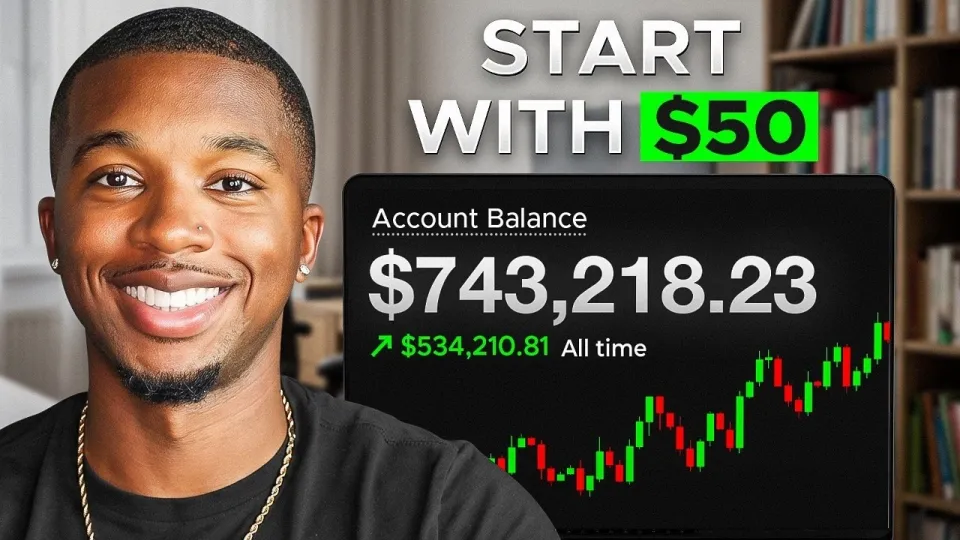
Video: Easiest Way To Start Day Trading From Scratch (Exactly What I Did)
Want articles like this for your own video to promote it on YouTube and Google? Order them through the Telegram bot @sat_sit_bot. Articles with your video embedded are written and posted by the bot itself — on popular topical sites (no ads). Try it free: 50 articles on us.
· based on the channel Jooviers Gems
Day trading from scratch means choosing one market, learning how a candlestick is built, trading a demo account for at least a month, and only then risking small real money with a fixed risk per trade. That is the whole path — no secret indicator, no paid signal group required. The breakdown below follows the beginner roadmap from the Jooviers Gems video "Easiest Way To Start Day Trading From Scratch (Exactly What I Did)", and if you want to see the author's own entries as they happen, the Inner Circle is here: Jooviers Gems Inner Circle.
What day trading actually is and what it is not
Day trading is opening and closing positions inside the same trading session, so you never hold overnight risk. A day trader typically takes a handful of trades per session, aims for a small consistent edge, and closes everything before the market shuts down. It is not investing, it is not "buy and hold", and it is not a get-rich-quick scheme — the math is boring on purpose. Most beginners fail not because the strategy is complicated but because they trade too many markets, size too big, and quit after the first red week. The realistic version of this job looks like: one chart, one setup, one or two hours of screen time, and a journal that tells you whether you actually have an edge.
Step 1 — Pick one market and stay there
Choose a single instrument and learn its personality before you look at anything else. Futures traders usually start with micro contracts such as MNQ (Micro Nasdaq) or MES (Micro S&P 500) because the tick value is small and the margin requirement is low. Forex beginners often pick one major pair, for example EUR/USD, and ignore everything else. Stocks have the widest selection and the most noise for a new trader, which is exactly why jumping straight into a watchlist of twenty tickers is the fastest way to learn nothing. One market means one set of hours, one volatility profile, and one pattern you can actually memorise.
Step 2 — Learn to read a candlestick before any indicator
A candlestick is four prices compressed into one shape: open, close, high, and low. The thick part is the body and it shows the distance between open and close; the thin lines are wicks and they show where price was rejected. A long lower wick under a green candle means sellers pushed price down and buyers took it back — that is information you can trade. Indicators are calculated from candles, so reading the raw candle first means you understand what the indicator is actually telling you. This is the single most repeated piece of feedback under the video: beginners say the candlestick explanation finally made the chart readable.
Step 3 — Build one simple strategy instead of collecting ten
A beginner strategy needs three answers only: where do I enter, where do I get out if I am wrong, and where do I get out if I am right. A workable version looks like this:
- Mark the previous session high and low, or the first hour range, on your chart.
- Wait for price to break that level and then close back inside it — that is your signal.
- Enter on the retest, place your stop just beyond the wick that created the level.
- Target the opposite side of the range, or a fixed multiple of your risk.
That is a complete strategy. It is not the only one, but it is simple enough to backtest in an evening and specific enough that you can tell whether it works. Adding a second and third setup before the first one is profitable just multiplies your mistakes.
Step 4 — Prove it on a demo account and with backtesting
Backtesting means scrolling back through historical charts and counting how your rules would have performed; demo trading means executing those rules live with fake money. Do both. A reasonable bar before going live is 100 backtested setups and at least 30 days of demo trading, because that is roughly the point where you stop being surprised by normal losing streaks. One viewer described a month of demo and backtesting that produced over $8,000 of simulated profit including losses — the number matters far less than the fact that the process was followed consistently. Demo results also expose the real enemy: hesitation, early exits, and moving stops.
Step 5 — Size small and define risk before every trade
Risk management is what keeps a beginner in the game long enough to get good. A simple rule: risk a fixed percentage of the account per trade, commonly 1%, and never widen a stop to avoid a loss. On a $500 account that is $5 of risk per trade, which sounds trivial until you realise the goal of month one is not profit, it is repetition without damage. Position size is calculated backwards from that number: if your stop is 20 ticks away on MNQ, you trade the number of contracts that makes 20 ticks equal your risk. Traders who blow up almost always did it by sizing up after a win, not by picking the wrong direction.
Step 6 — Understand how prop firm funding works
A prop firm gives you access to the firm's capital after you pass an evaluation, and you keep a share of the profits. The evaluation usually has a profit target, a maximum daily loss, and a maximum overall drawdown, and breaking either loss limit fails the account. This route exists because most beginners do not have $25,000 sitting around, and it forces discipline through hard rules rather than willpower. The trade-off is real: the rules are strict, and a single oversized day can end an account that took weeks to build. Read the drawdown terms before you pay any evaluation fee, and treat the limits as the strategy's real constraint.
Step 7 — Journal every trade and review weekly
A trading journal is the only feedback loop that separates improvement from repetition. For each trade, record the setup, the entry and exit, the size, the result, and one sentence about how you felt and whether you followed your rules. Then review once a week and look for patterns: are losses clustered around a specific hour, a specific market condition, or a specific emotional state? A dedicated journal tool such as WAGMI Trader (the author's code is WAGMI) is built for exactly this, though a spreadsheet works fine at the start. The metric that matters early is rule-compliance percentage, not profit.
Common beginner questions answered
The most frequent doubts under this kind of video are about time, money, and expectations, and they deserve direct answers. How much money do you need? You can start learning with nothing on a demo, and a few hundred dollars is enough to trade micro futures or small forex positions — the account size limits your income, not your ability to learn. How long until profitable? Expect several months of consistent screen time; anyone promising weeks is selling something. Do you need a course? No, but you do need structure, and free content plus a journal covers most of it. What about the people posting huge wins on social media? Selective screenshots, and comparing yourself to them is the fastest route to oversizing. Finally, is a job still worth having? Yes — several viewers noted that employment risk is real, and trading income is far more stable when it is not the only money keeping the lights on.
Useful links from the breakdown
- Inner Circle with all the author's trades: https://www.getgemify.com/innercircleo?el=youtube_organic
- Instant funding to trade with: https://www.theedgefunder.com/
- The Edge Funder Discord community: https://discord.gg/WpJXHKK7f2
- Instagram: https://www.instagram.com/joovier_
- Recommended forex broker: https://herofx.co/joovier/
Final thoughts on starting from zero
Starting day trading from scratch is a sequence, not a talent: one market, candlesticks, one strategy, demo and backtesting, small fixed risk, then funding only if you need it. The steps above are the same ones laid out by Jooviers Gems in the video, and the channel is worth following because it shows losing trades alongside winners rather than selling a fantasy. Expect the first months to be about repetition and rule-following, not income, and treat every journal entry as the actual product you are building. When you are ready to see how the author executes these setups in real time, join the Inner Circle here: Jooviers Gems Inner Circle.
Key takeaways
- Start with one market only: futures (MNQ, MES) or a single forex pair, not ten tickers at once.
- Learn candlestick anatomy first: body, wick, open, close, high, low — before any indicator.
- Trade a demo account for at least 30 days and backtest 100+ setups before risking real money.
- Risk a fixed small amount per trade (for example 1% of the account) and journal every trade.
- Prop firm funding lets you trade a firm's capital after passing an evaluation, instead of saving a big account yourself.
- The Inner Circle at https://www.getgemify.com/innercircleo?el=youtube_organic shares the author's actual trades and entries.
Source: Easiest Way To Start Day Trading From Scratch (Exactly What I Did) · Markdown version
Questions & answers
How much money do I need to start day trading?
You can start with zero on a demo account, and a few hundred dollars is enough to trade micro futures or small forex positions when you go live. The account size determines your potential income, not whether you can learn the skill. Most beginners are better off proving a strategy on demo first and funding a real account later, either from savings or through a prop firm evaluation.
How long does it take to become profitable as a day trader?
Plan for several months of consistent practice, backtesting, and journaling before results stabilise. The first phase is about repetition and rule compliance, not profit. Anyone promising a profitable month within weeks is usually selling a course or signals rather than describing the actual learning curve.
Do I need a paid course or signal group to learn trading?
No — free content plus a trading journal covers most of what a beginner needs, and the video itself is built as a from-scratch walkthrough. What paid communities genuinely add is structure and accountability, such as seeing another trader's entries and reasoning. If you do pay for something, judge it by whether it teaches a repeatable process rather than by screenshots of wins.
Is prop firm funding better than saving up my own trading account?
Prop firm funding gives you access to a firm's capital after passing an evaluation, which is faster than saving a large account yourself. The trade-off is strict rules: a profit target, a daily loss limit, and a maximum drawdown that ends the account if broken. Read those terms carefully before paying any evaluation fee, because the limits become the real constraint on your strategy.